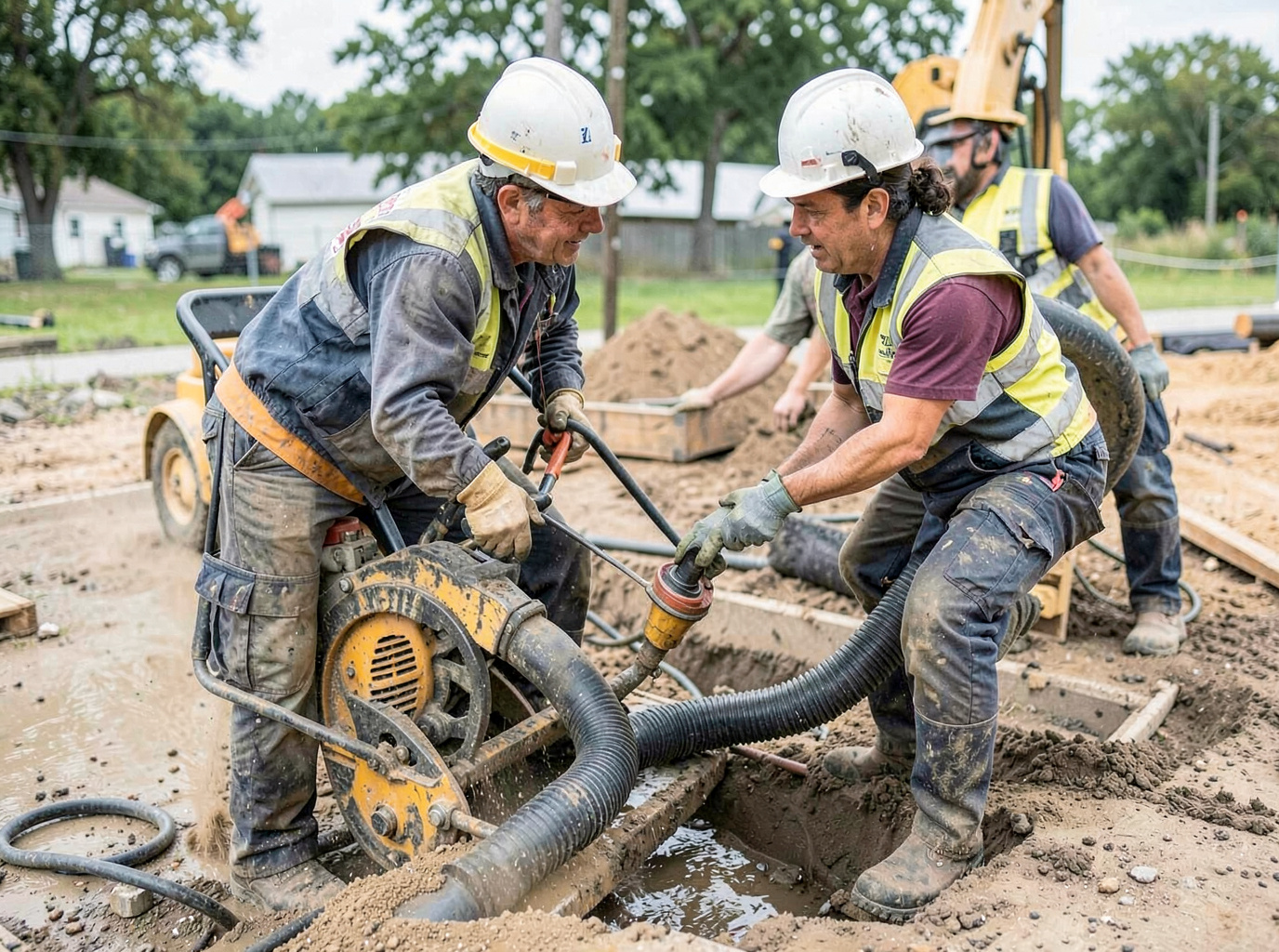
Wilmington's older housing stock in Trolley Square, Forty Acres and the East Side often features cast iron or clay lines installed decades ago. Tree roots from Brandywine Park and shifting soil near the Delaware Riverfront work their way into joints, creating recurring blockages that standard plungers cannot reach. Snaking with a 3/8-inch cable handles most residential laterals while a 5/8-inch or larger auger is required for main lines serving multi-unit buildings on the West Side. Operators must watch for pipe wall thinning; forcing a cable past a weak section can crack already brittle sections and turn a simple service call into an excavation.
Hot summers increase root growth while cold winters cause grease to solidify faster in kitchen lines common in Southbridge and Browntown. Properties near the river also deal with higher water tables that keep lines constantly damp, softening organic debris into a dense mat that requires repeated passes with a cutter head. Technicians select the machine based on cleanout location and pipe diameter rather than defaulting to the largest cable, because an oversized head can wedge in 2-inch traps found in many pre-1950 homes. Proper retrieval technique prevents the cable from kinking or leaving broken blades inside the line.
Before starting, the crew verifies cleanout access and checks for prior repairs that may have used no-hub couplings, which can separate under torque. After clearing, a final camera pass confirms the line is open and identifies any offsets that will need attention later. Homeowners in Highland and Downtown Wilmington are advised to schedule this service before winter to avoid frozen standing water that expands and cracks pipes. The work stays within the existing cleanouts whenever possible to avoid disturbing finished surfaces or landscaping around Rodney Square properties.
Technician insight
In Wilmington the thing that catches most people out with Drain Snaking & Augering is the combination of old cast iron laterals and high water tables near the river; a cable that works fine in Newark will bind or kink in the soft, offset joints common in Southbridge and the East Side.
Recurring Backup on a Clay Line
A homeowner in Browntown reported backups after heavy rain. The crew found roots had entered a clay lateral near the Delaware Riverfront. They ran a root-cutting auger from the exterior cleanout, cleared the intrusion in two passes, and flushed the line. The camera showed the pipe was still serviceable, avoiding excavation.
Drain Snaking & Augering Services We Offer
✓Kitchen Drain Snaking
Clears grease and food buildup in lines serving sinks near older restaurant corridors along the riverfront using a cutter head sized for 1.5- to 2-inch pipes.
✓Bathroom Line Augering
Removes hair and soap clogs from tub and shower drains in Trolley Square row homes where access points are often located in tight crawl spaces.
✓Main Sewer Line Snaking
Handles blockages between the house trap and the street main in New Castle County neighborhoods with clay or cast iron laterals.
✓Root Intrusion Removal
Cuts through tree roots invading lines near Brandywine Park and Forty Acres using a root-cutting blade followed by flushing.
✓Emergency Clog Augering
Responds to sudden backups in Southbridge and Browntown homes where multiple fixtures are affected, often after heavy rain raises the water table.
Drain Snaking & Augering Cost in DE
| Service | Typical Range | What Affects It |
|---|---|---|
| Kitchen or Bath Drain Snaking | $125–$275 | Higher when cleanout is in a crawl space or requires extra cable length |
| Main Line Augering | $225–$450 | Varies with root density and distance to the city connection |
| Root Cutting Add-On | $75–$150 | Added when roots are found during the initial pass |
| Camera Verification | $95–$175 | Recommended after clearing older cast iron lines |
Ranges are typical for DE and confirmed with an exact written quote before any work starts.
How it works
- 1
Site Assessment
Technician locates the nearest cleanout, checks pipe material and diameter, and determines whether a cable machine or power auger is appropriate for the blockage.
- 2
Equipment Selection
Selects cable size and head type based on line condition, depth, and known issues such as offsets common in East Side and West Side properties.
- 3
Clearing the Line
Advances the cable or auger in controlled passes, breaking up the clog without forcing past weak joints in older Wilmington piping.
- 4
Verification and Flush
Runs a camera to confirm clearance, then flushes the line to remove debris before restoring fixtures.
Pricing
Cost depends on line depth, clog material, and whether multiple passes or a camera inspection is required.