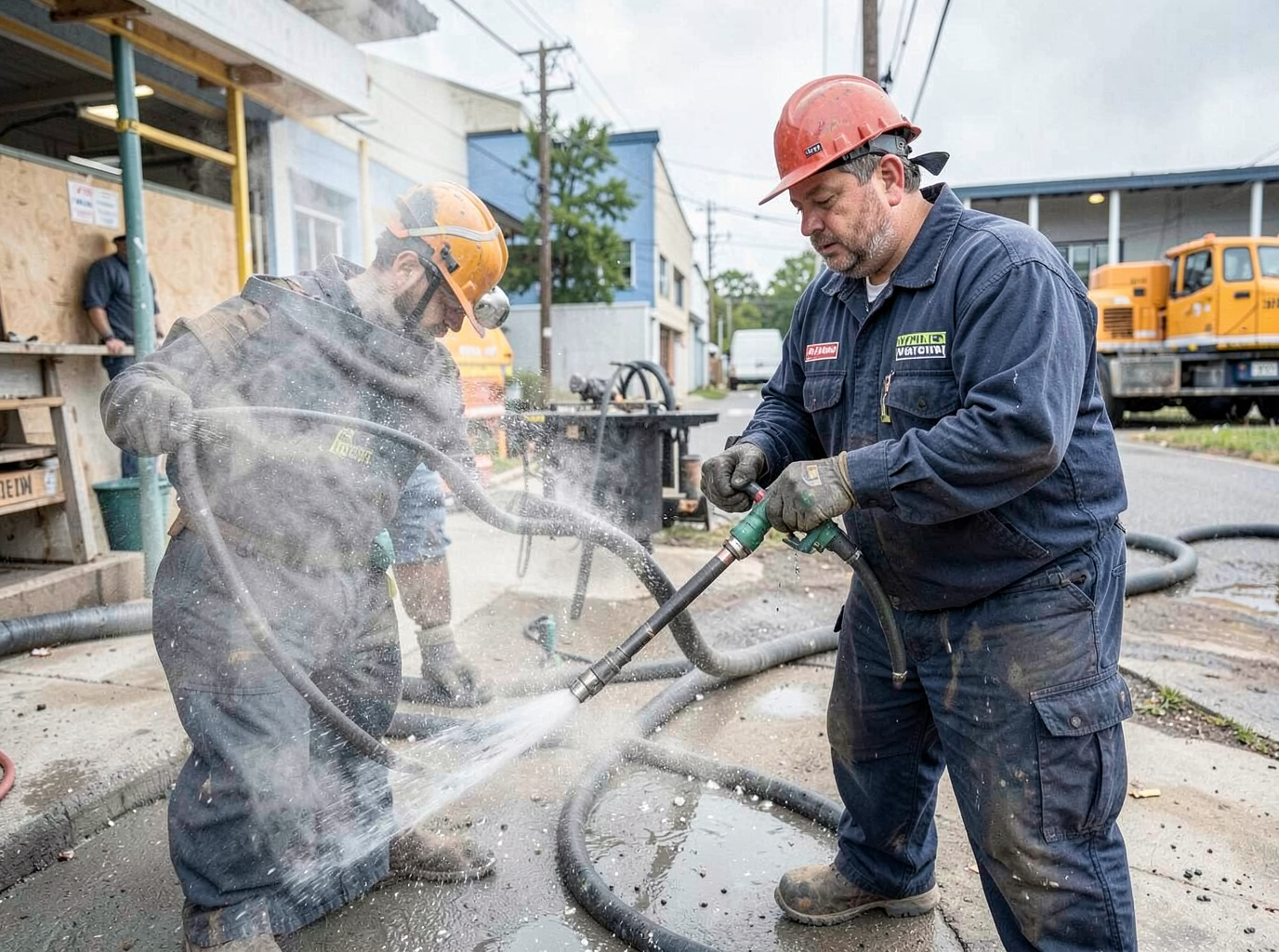
Wilmington’s older housing stock in neighborhoods like East Side, Browntown and Forty Acres often features clay or cast-iron lines installed decades ago. These pipes collect grease from nearby restaurants along the Delaware Riverfront and tree roots that thrive in the area’s humid subtropical climate. Hydro jetting uses 3,500–4,000 psi water streams to scour pipe walls completely, restoring full flow without chemicals that could damage aging joints.
Cold winters in New Castle County cause ground movement that shifts lines under streets near Brandywine Park and the Grand Opera House district. Seasonal root intrusion spikes after spring thaws, especially in Trolley Square and Highland properties with mature trees. Technicians from 48 Germay Dr schedule jetting during milder months when access is easier and frozen ground does not complicate equipment placement.
In Southbridge and West Side homes, post-construction debris from renovations frequently blocks main lines. Jetting removes sand, concrete slurry and paper products that snaking alone leaves behind. Proper nozzle selection prevents pipe damage in fragile sections while ensuring downstream flow to the city sewer connection.
Technicians always verify line integrity with a camera after jetting, especially on properties near Claymont or Newark borders where shared laterals are common. This step catches hidden cracks that high pressure could worsen and gives homeowners a clear record of pipe condition before winter sets in.
Technician insight
In Wilmington the thing that catches most people out with hydro jetting is how quickly cold winters shift older clay lines under Browntown and Southbridge yards. A line that flowed fine in October can be half blocked by roots by March because the freeze-thaw cycle opens small joints that jetting then has to navigate carefully.
Root-clogged line near Brandywine Park
A homeowner in the Forty Acres neighborhood noticed slow drains after a cold snap. Camera inspection showed roots penetrating a clay lateral. Hydro jetting cut the roots and flushed debris, restoring full flow to the main without excavation.
Hydro Jetting Services We Offer
✓Main Sewer Line Hydro Jetting
Clears heavy buildup and root intrusion from the primary sewer line connecting Wilmington homes to New Castle County mains.
✓Kitchen Grease Line Jetting
Removes hardened cooking grease that accumulates in lines from restaurants and older homes near the Delaware Riverfront.
✓Bathroom Drain Hydro Jetting
Restores flow in tub, shower and toilet lines affected by hair, soap scum and mineral scale common in local water.
✓Tree Root Removal Jetting
Cuts and flushes roots invading lines under yards in Brandywine, Trolley Square and Forty Acres neighborhoods.
✓Storm Drain Jetting
Clears leaves, silt and debris from exterior drains before heavy summer rains or winter freeze-thaw cycles.
Hydro Jetting Cost in DE
| Service | Typical Range | What Affects It |
|---|---|---|
| Main line hydro jetting | $350–$650 | Price rises with deeper access or heavy root intrusion in older East Side homes. |
| Kitchen or bath branch lines | $250–$450 | Shorter runs in Trolley Square row homes usually cost less. |
| Storm drain clearing | $200–$400 | Seasonal leaf and silt removal near Brandywine Park. |
| Emergency after-hours jetting | $450–$800 | Available Sat 9am–2pm; higher for weekend response. |
Ranges are typical for DE and confirmed with an exact written quote before any work starts.
How it works
- 1
Camera Inspection
Technician runs a camera from the cleanout at 48 Germay Dr based jobs to locate the clog and assess pipe material.
- 2
Equipment Setup
Hose and jetting head are positioned at the access point while protecting landscaping in tight Wilmington lots.
- 3
High-Pressure Jetting
Water at controlled pressure scours the pipe walls, breaking up roots, grease and sludge for full evacuation.
- 4
Final Verification
Post-jet camera pass confirms clear flow and notes any pipe issues before leaving the property.
Pricing
Most hydro jetting jobs in Wilmington fall between $300 and $750 depending on line length and access difficulty.