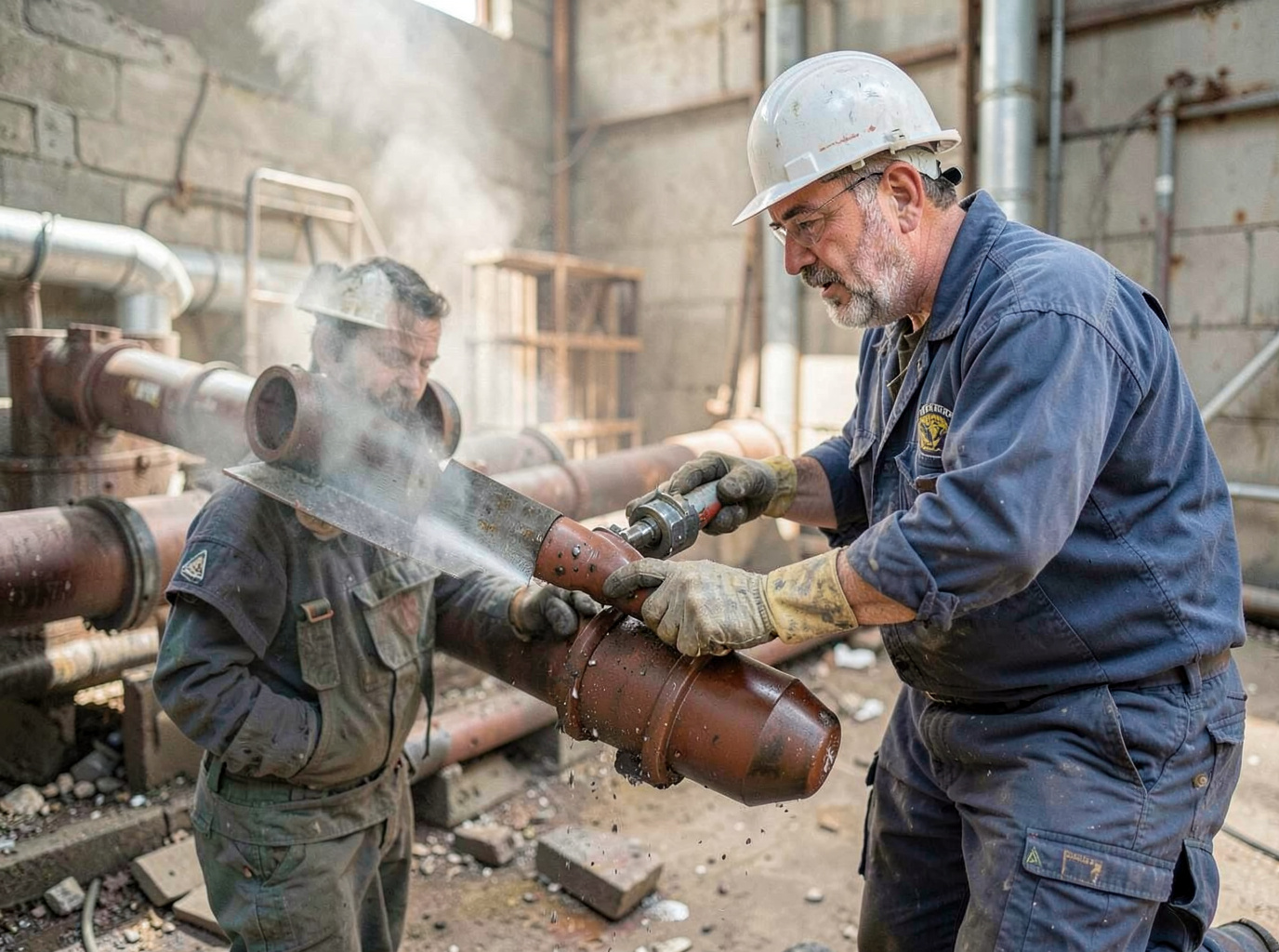
Cast iron pipes installed in Wilmington homes built before 1970, especially those in Brandywine, Trolley Square and the East Side, develop thick mineral scale from the area's hard water and humid subtropical summers. This buildup narrows the interior diameter and traps debris, leading to slow drains that worsen when cold winter temperatures cause ground contraction around the lines. Descaling must be done with controlled mechanical cutters or hydro jetting at pressures calibrated for decades-old iron to avoid cracking the brittle walls that often sit under narrow city lots.
Technicians working from 48 Germay Dr routinely encounter root intrusion combined with scale in Southbridge and Browntown properties near the Delaware Riverfront, where seasonal moisture encourages roots to enter joints already narrowed by iron oxide. Camera inspection precedes every job so the crew can map pipe condition and choose the right tool sequence, preventing unnecessary excavation in tight backyards common to Forty Acres and Highland. Post-descaling, flow is verified and homeowners are advised to schedule annual maintenance before winter freezes tighten the soil again.
Code compliance in New Castle County requires that any exposed cast iron sections be inspected for wall thickness after descaling; thinned pipes may need spot lining rather than full replacement. Crews avoid aggressive acids that can accelerate corrosion in the remaining iron, opting instead for progressive mechanical removal followed by a low-pressure flush that clears the line without disturbing surrounding Delaware River clay soils.
Technician insight
In Wilmington the thing that catches most people out with Cast Iron Pipe Descaling is how quickly winter ground shifts in neighborhoods like Forty Acres and Highland can turn a scaled pipe into a cracked one once the scale is removed; the iron is already thin from decades of service and the clay soils around the Delaware River expand and contract hard.
Browntown Cast Iron Restriction
A homeowner on the East Side reported slow kitchen drainage that worsened after the first hard freeze. Camera inspection revealed heavy scale narrowing a 4-inch cast iron line under the rear yard. Mechanical descaling restored full flow without excavation, and the line was flushed clear before winter set in.
Cast Iron Pipe Descaling Services We Offer
✓Mechanical Cast Iron Descaling
Uses calibrated chain knockers and root cutters sized for 3- to 6-inch cast iron to remove scale without fracturing aging pipe walls common in pre-1970 Wilmington homes.
✓Hydro Jetting Cast Iron Lines
Applies controlled water pressure to scour mineral deposits from cast iron while protecting joints weakened by decades of freeze-thaw cycles in New Castle County.
✓Camera Inspection Before Descaling
Locates scale thickness and pipe defects in lines serving Downtown Wilmington and Brandywine properties so the correct descaling method can be selected.
✓Root and Scale Combination Removal
Clears both root intrusion and mineral buildup in cast iron laterals typical of Southbridge and Browntown homes near the riverfront.
✓Post-Descaling Flow Verification
Confirms restored drainage capacity after descaling and documents pipe condition for owners in Trolley Square and Forty Acres.
Cast Iron Pipe Descaling Cost in DE
| Service | Typical Range | What Affects It |
|---|---|---|
| Camera Inspection and Descaling | $350–$650 | Single line up to 50 feet; longer runs or multiple cleanouts increase cost |
| Hydro Jetting Add-On | $200–$400 | Added when heavy scale requires water pressure after mechanical cutting |
| Root Intrusion Combo Job | $450–$850 | Includes root cutting plus scale removal in riverfront neighborhoods |
| Follow-Up Camera Verification | $125–$200 | Optional second inspection after descaling for peace of mind |
Ranges are typical for DE and confirmed with an exact written quote before any work starts.
How it works
- 1
Initial Camera Assessment
A technician runs a camera through the cast iron line from the cleanout or roof vent to measure scale depth and locate any cracks before any tool enters the pipe.
- 2
Mechanical or Jet Descaling
Progressive cutters or hydro jetting remove scale in stages, with water flow used to flush debris toward the main while monitoring for pipe integrity.
- 3
Final Inspection and Flush
A second camera pass verifies scale removal, followed by a high-volume flush to clear remaining sediment from the line serving the Wilmington property.
- 4
Homeowner Walkthrough
The crew explains findings, shows before-and-after footage, and notes any sections that may need future lining based on wall condition observed in New Castle County homes.
Pricing
Most cast iron descaling jobs in Wilmington fall in the mid-hundreds to low-thousands depending on access and pipe length.